Ongava vs Onguma: Which Etosha Reserve to Choose?

As you begin to sketch the outlines of your 2027 Namibian adventure, the legendary Etosha National Park undoubtedly sits at its heart. A vast, shimmering salt pan surrounded by life-giving waterholes, Etosha is a theatre of wildlife. But for a truly immersive experience, many discerning travellers look to the private reserves that border the park. This brings up one of the most common and important questions we hear: should we choose Ongava Reserve vs Onguma Reserve?
Both are world-class destinations, offering exclusivity, exceptional lodging, and activities not permitted within the national park itself. The choice isn't about which is 'better,' but which is a better fit for you, your interests, and your unique journey across Namibia. This guide will help you understand the subtle but significant differences, ensuring you make the perfect choice for your upcoming trip.
The Lay of the Land: Location, Location, Location
The most fundamental difference between Ongava and Onguma is their geography. They flank opposite sides of Etosha National Park, and this simple fact has major implications for your travel logistics.
Ongava Private Game Reserve lies along Etosha’s southern boundary. Its lodges are just a short drive from the park's most popular entrance, Anderson's Gate. This strategic position makes it a seamless continuation of a classic Namibian circuit that travels north from the capital, perhaps after exploring the ancient rock art and desert-adapted elephants of Damaraland.
If your itinerary flows from the south-west, Ongava is the most logical and time-efficient choice. You can spend your days exploring the iconic waterholes around Okaukuejo inside the park, then retreat to the tranquility and privacy of Ongava for sundowners and spectacular night drives.
Onguma Nature Reserve, on the other hand, is situated on the eastern edge of Etosha, bordering the park near the Von Lindequist Gate. This makes it the perfect gateway for travellers arriving from or departing to the lush wetlands of the Zambezi Region (formerly the Caprivi Strip). Its location is ideal for those looking to combine the dry-world drama of Etosha with the riverine wonders of Namibia’s north-east.
So, the first step in your decision is to look at your map. Is your journey a clockwise loop from Windhoek? Or are you traversing the country from west to east? Your answer will provide a strong clue as to which reserve aligns best with your route.
Wildlife and Conservation Focus
While both reserves boast the Big Four (leopard, lion, elephant, and rhino) and a rich tapestry of other species, they have distinct characters shaped by their conservation stories and landscapes.
Ongava: A Rhino Conservation Stronghold
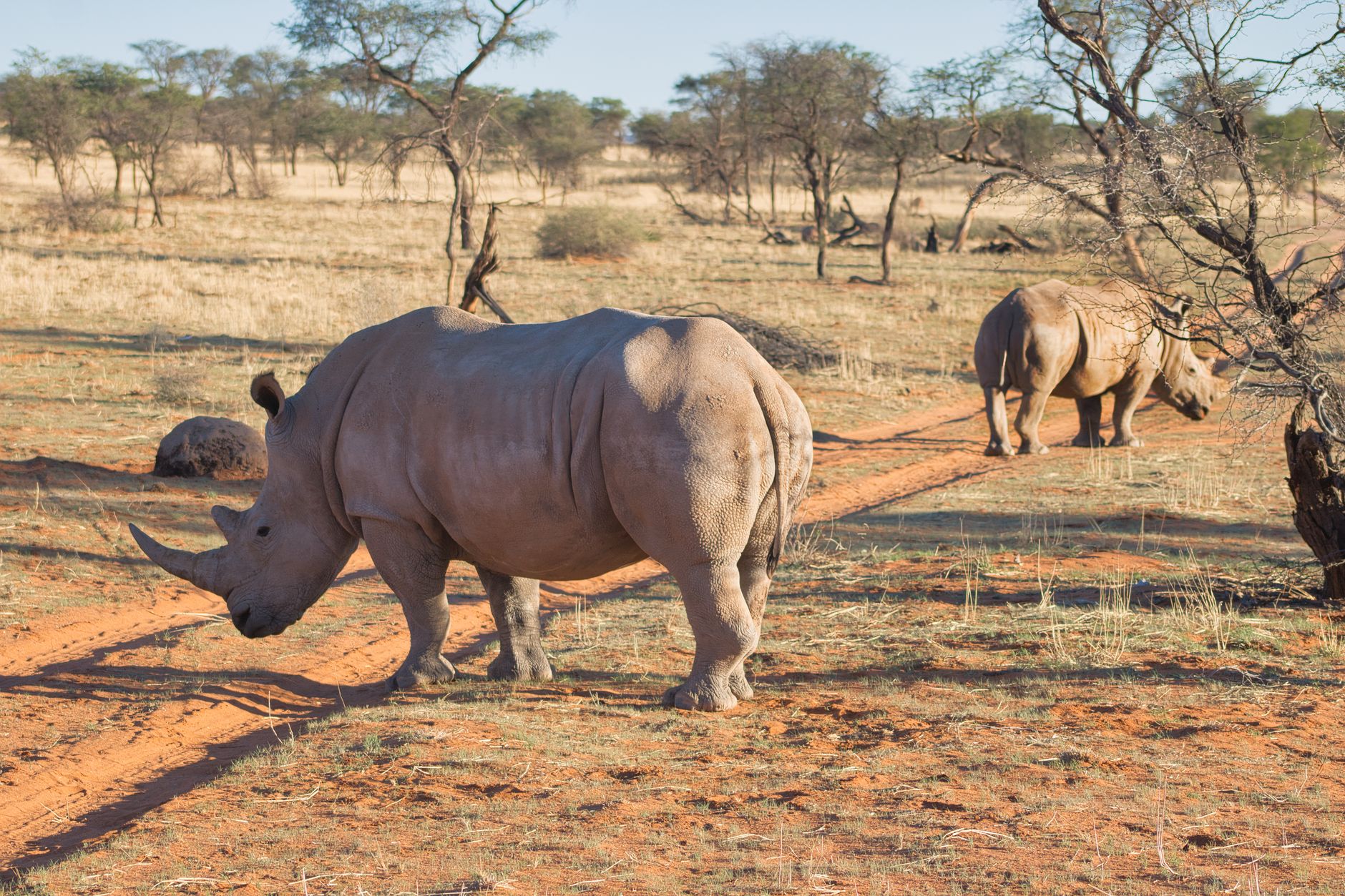
Ongava is, quite simply, one of the most important rhino custodians in Africa. The 30,000-hectare reserve was formed in 1991 with the vision of creating a conservation buffer for Etosha and reintroducing species that had vanished from the area. Its greatest success has been its rhino program.
Here, both black and white rhino thrive. Ongava's research centre is at the forefront of conservation science, and this deep commitment translates into an unparalleled visitor experience. The flagship activity is rhino tracking on foot. Accompanied by expert guides, this is a heart-in-your-mouth, profoundly moving experience that connects you to these magnificent animals in a way a game drive simply cannot.
Of course, the wildlife experience extends far beyond rhinos. Ongava is home to a healthy, predator-rich ecosystem with famously relaxed lion prides. A stay here offers a powerful combination of Etosha's immense scale and the intimate, high-impact sightings of a private concession dedicated to conservation.
Onguma: A Birder's Paradise with Big Game
Covering a slightly larger 34,000 hectares, Onguma’s landscape feels wonderfully diverse. It encompasses classic bushveld, but also the sandy plains of the Omuramba Oware, and even a small salt pan that mirrors the great Etosha Pan next door. This variety of habitats makes Onguma a haven for birdlife.
With over 300 recorded species, it’s a premier destination for ornithologists, especially during the ‘green season’ from February onwards when summer migrants are present. Its proximity to Fischer’s Pan inside Etosha, a renowned birding hotspot, further cements its reputation. Game viewing is equally rewarding, with resident lions, leopards, and cheetahs. Onguma has also played a vital role in re-establishing populations of the endemic black-faced impala.
One of Onguma's defining features is its focus on the waterhole experience. The reserve is dotted with beautifully designed hides, some of which are destinations in themselves, allowing for hours of peaceful, up-close observation as animals come and go.
Ongava Reserve vs Onguma Reserve: The Experience on the Ground
Beyond location and specific wildlife strengths, the 'feel' of each reserve is shaped by the activities on offer. Both provide experiences you cannot have while staying inside the national park, such as night drives and guided bush walks. These activities open up a whole new world, revealing nocturnal creatures and the smaller details of the ecosystem.
Accommodation in both reserves spans the spectrum from beautiful campsites to the height of safari luxury, so you can find a perfect match for your style and budget. Nearby options like Etosha Oberland Lodge provide an excellent base for exploring the region, offering modern comfort just a stone's throw from the park's entrance.
To help you differentiate, here are some of the signature experiences:
- Ongava: The absolute must-do is rhino tracking on foot. It is a core part of their identity. The reserve's hilly terrain, particularly around Anderssons at Ongava, also provides stunning lookout points and a different driving experience to the flatlands of Etosha.
- Onguma: Famous for its waterhole hides. The hide at Onguma The Fort is legendary, offering ground-level views across a bustling water source. Their night drives are also particularly rewarding, and the sundowner experience overlooking the reserve's own pan is unforgettable.
Ultimately, both reserves allow you to enjoy the best of both worlds: game drives into the vastness of Etosha during the day, followed by exclusive safari activities on private land in the golden hours of dawn and dusk.
How to Choose: A Guide for Your 2027 Namibia Safari
By now, you likely have a leaning towards one reserve. Let's crystallize the decision-making process for your 2027 safari plans.
You should lean towards Ongava if:
- Your primary motivation is seeing rhinos, and you are captivated by the idea of tracking them on foot with an expert guide.
- Your itinerary flows naturally from the south or west, coming from regions like Sossusvlei or Damaraland.
- You appreciate the story of a conservation-first project that has become a global model for species protection.
You should lean towards Onguma if:
- You are a keen birder, or you're travelling between February and April when the birdlife is at its most prolific.
- Your itinerary connects Etosha with the eastern regions of Namibia, such as the Zambezi.
- You love the idea of diverse landscapes, from bushveld to pans, and spending tranquil hours in a strategically placed photographic hide.
Remember, this is not a choice between a good option and a bad one. It’s a choice between two exceptional options. Your decision will simply fine-tune your safari to your personal tastes. For some, the thrill of tracking a black rhino is the pinnacle of a trip; for others, it's the quiet solitude of watching thousands of sandgrouse descend on a waterhole at dusk. Some may even choose to combine their Etosha trip with a completely different ecosystem, like the hauntingly beautiful shores where you find Shipwreck Lodge.
The debate of Ongava Reserve vs Onguma Reserve is a wonderful 'problem' to have. It signifies you are already on the path to a deeper, more considered Namibian safari. Both reserves provide an essential element of modern conservation travel: an exclusive, respectful, and deeply enriching encounter with the wild, all while supporting the protection of the very wilderness they share with Etosha National Park. Whichever gate you choose, an unforgettable adventure awaits you in 2027.

Where to stay in Sossusvlei & Namib
Browse handpicked places to stay — many with live availability and instant booking.
 4(378)
Brandberg Rest Camp
Uis, Damaraland, Erongo
 4.5(921)
Etosha Safari Campsite
Near Andersson Gate, Etosha
 4.9(126)
Mukuku Oasis Lodge
Mupapama, Kavango River
 4.4(291)
The Elegant Guest House
Klein Windhoek, Khomas
 4.9(19)
Otjiwa Collection - Mountain Lodge
Otjiwarongo, Waterberg
 4.3(249)
Dead Valley Lodge
Sesriem, Sossusvlei, Hardap
Let us plan this trip for you
Send us your dates, party and budget and we'll come back with a costed itinerary — lodges, flights, transfers and activities in one place. No fee, no obligation.
Keep reading


See our safari advice first on Google
One tap tells Google you want Safari Stays shown higher when you search for safari and travel news. It takes a second and you can undo it anytime.
Make Safari Stays a preferred source on Google