Lüderitz to Sossusvlei Driving Route: A Desert Guide

Few landscapes inspire the same quiet reverence as the sweeping southern reaches of Namibia. Embarking on the luderitz to sossusvlei driving route is one of the most unforgettable overland journeys in Southern Africa, tracing a dramatic transition from the windswept Atlantic coastline to the world's most towering red sand dunes.
For travellers planning an expedition for the upcoming dry season between March and August 2027, this route requires thoughtful preparation. The transition from cool ocean air to deep desert terrain involves navigating remote gravel passes, wide-open horizons, and some of the country's most rewarding backcountry scenery.
The Classic Luderitz to Sossusvlei Driving Route via the D707
While there are faster paths across central southern Namibia, the traditional and most rewarding route heads east from Lüderitz along the paved B4 before turning north into the vast expanse of the Karas region. From the tiny mountain railway village of Aus, drivers typically choose between the quicker C13/C27 corridor via Helmeringhausen or the legendary D707—often heralded as Namibia’s most scenic gravel road.
The D707 skirts the boundary of the Namib-Naukluft Park and cuts directly through the dramatic Tiras Mountain Conservancy. Here, red desert sand encroaches against pale granite massifs, creating contrast and soft pastel gradients that are best appreciated during golden hour.
Overall, the journey spans approximately 480 to 520 kilometres depending on your chosen detours. While a straight highway drive of this distance might take five hours elsewhere, traversing southern Namibia's corrugated gravel roads safely demands a relaxed pace of seven to eight hours of driving time.
Stage One: From Atlantic Mist to the Granite Outcrops of Aus
Your morning begins along the rugged shores of the Sperrgebiet, leaving behind the German colonial architecture of Lüderitz. The initial leg eastward along the tarred B4 cuts straight through dynamic sand corridors, where shifting coastal barchan dunes occasionally spill across the asphalt.
Around 100 kilometres inland, the desert opens toward Garub. Take a short pause at the Garub water point to scan the golden plains for the resilient feral desert horses of Namibia, whose origins date back more than a century. From Garub, the road ascends steadily into the crisp, high-altitude air of the Aus mountains.
Aus serves as a vital strategic milestone and the ideal overnight stop for those who prefer to split this long transit into two gentle days. Resting at Orange House offers a restful sanctuary in the village before you leave asphalt behind for hundreds of kilometres of backcountry gravel. Setting out well-rested the following morning ensures you tackle the more demanding secondary tracks with fresh concentration.
Stage Two: Traversing the Tiras Mountains on Gravel
Leaving Aus, your route turns onto the C13 before branching north onto the D707. The sudden change under wheel is immediate: the quiet rumble of tar gives way to the rhythmic crunch of calcrete, crushed quartz, and wind-drifted sand.
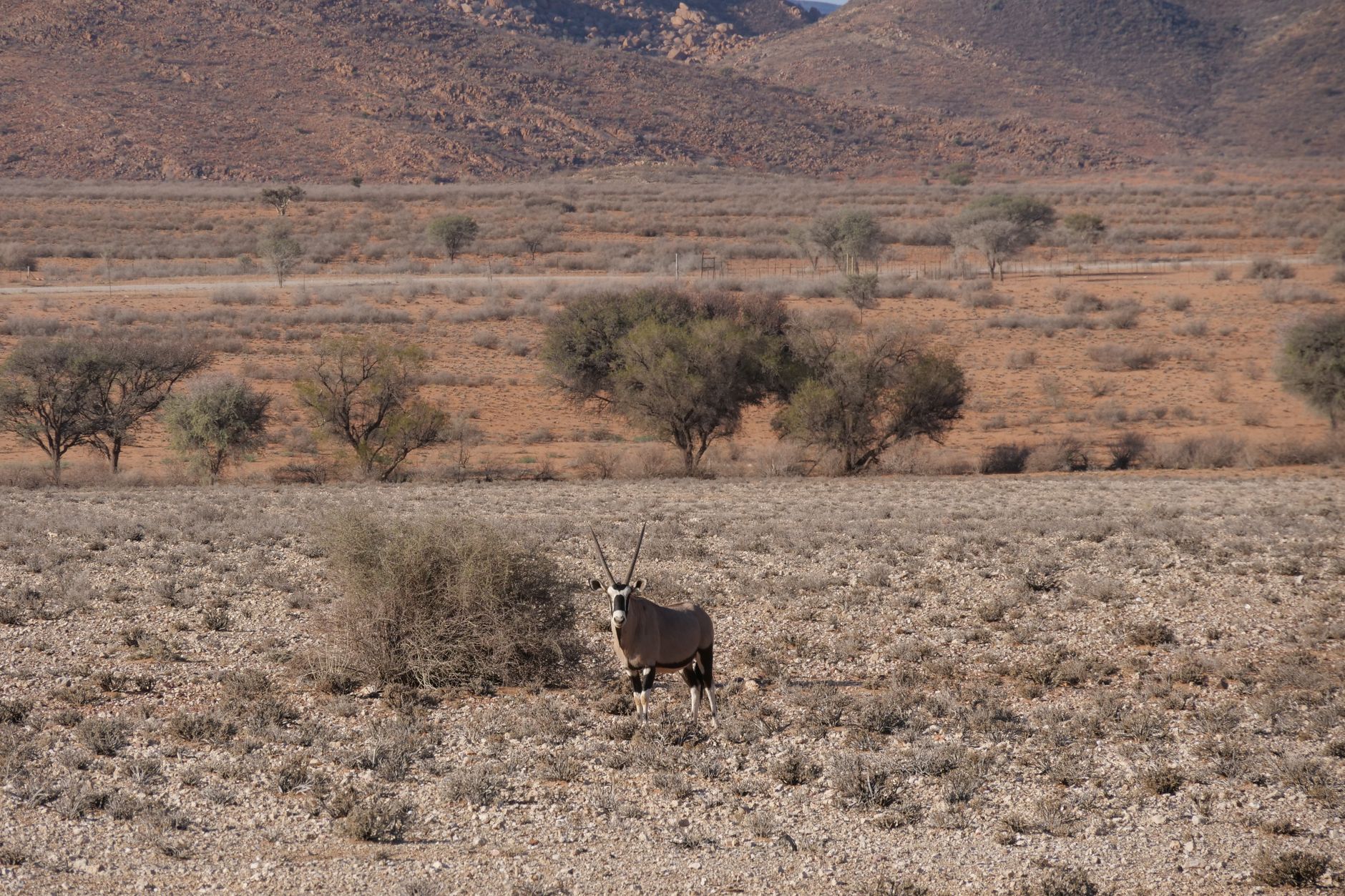
Driving the D707 requires patience and a gentle foot. The speed limit is often technically higher than what conditions sensibly dictate, with sharp crests, sudden patches of deep sand, and wandering wildlife requiring continuous vigilance. Springbok, gemsbok, and ostriches frequently graze along the margins, their silhouettes shimmering against the pastel red dunes of the eastern Namib.
This stretch is also the natural connection point for those arriving from or continuing south into the Fish River canyon landscape. The silence here is profound; you may drive for hours without meeting another vehicle, surrounded only by ancient geology and broad sky.

Entering the Red Dunes of Sesriem and Sossusvlei
Rejoining the C27 gravel artery north of Betta, the track carries you straight into the true gateway of the central Namib. The flat plains narrow, framed to the west by the ever-growing crimson spine of the Great Sand Sea, an expansive UNESCO World Heritage site.
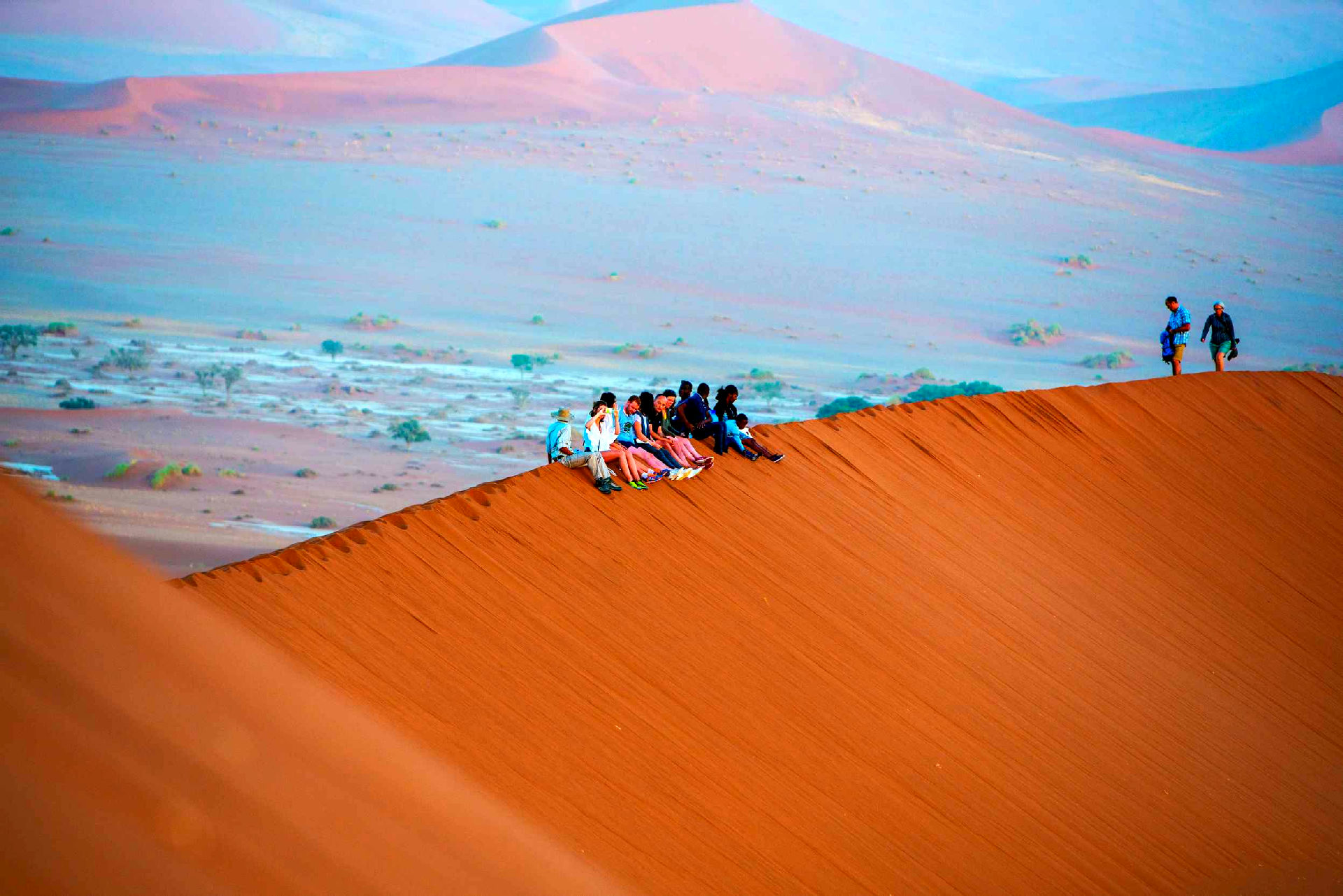
Sesriem functions as the access hub for the Sossusvlei dunes, Dead Vlei, and the carved channels of Sesriem Canyon. Arriving in the late afternoon allows you to settle into your accommodation while the sun dips low, igniting the iron-rich sand ridges in vivid shades of copper and violet.
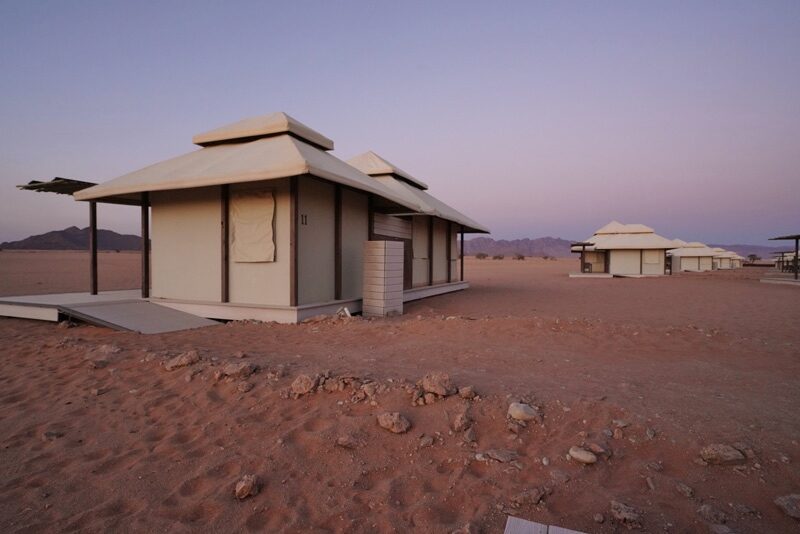
For those seeking absolute seclusion and design-forward comfort amidst the silence, Desert Whisper provides an intimate one-of-a-kind desert retreat overlooking pristine gravel plains. Alternatively, staying nearby at Hoodia Desert Lodge balances desert authenticity with attentive hospitality, giving you effortless access to the park gates ahead of the morning gate opening.
Essential Planning for the Southern Desert Drive
Self-driving this vast wilderness remains exceptionally rewarding, provided you respect the harsh environment and observe key desert driving fundamentals. When preparing for mid-2027 expeditions, consider these practical rules:
- Vehicle Specification: Always secure an elevated 4x4 with robust all-terrain tyres. While high clearance is the bare minimum, four-wheel drive provides vital stability over corrugated tracks and security across sandy patches.
- Tyre Management: Reduce tyre pressures moderately on continuous gravel sections to soften the ride and lower puncture risks. Carry a working 12V compressor, a reliable pressure gauge, and two full-sized spare tyres.
- Fuel Strategy: Never bypass an open fuel pump. Fill up completely in Lüderitz and top off again in Aus or Betta, as small desert fuel stations occasionally face delivery delays.
- Provisions: Always carry a minimum of five litres of drinking water per person per day in your vehicle, alongside dry rations, basic emergency recovery equipment, and an offline navigation device or detailed physical map.

Planning your travel for the southern hemisphere winter months—between May and August—rewards you with stable weather, crystal-clear skies, and comfortable daytime temperatures ideal for outdoor exploration, though night-time temperatures in the desert valleys can dip close to freezing.
Whether undertaken as part of an expansive circular loop through the southern deserts or as a scenic link in a nationwide itinerary, navigating the luderitz to sossusvlei driving route reveals the untamed soul of Namibia's southern wilderness, leaving you with memories etched in golden light and endless open space.
Where to stay in Sossusvlei & Namib
Browse handpicked places to stay — many with live availability and instant booking.
 4.3(249)
Dead Valley Lodge
Sesriem, Sossusvlei, Hardap
 4.4(387)
The Elegant Desert Lodge
Sesriem, Hardap
 4.1(272)
Sossus Dune Lodge
Sesriem, Namib-Naukluft National Park, Hardap
 5(3)
Reverie Kalahari Pod
Kalahari, 30 km from Mariental
 4.6(1136)
Kalahari Anib Lodge
Kalahari, 30 km from Mariental
 4.7(325)
Desert Homestead Lodge
Sesriem, Hardap
Let us plan this trip for you
Send us your dates, party and budget and we'll come back with a costed itinerary, with lodges, flights, transfers and activities in one place. No obligation.
Keep reading


See our safari advice first on Google
One tap tells Google you want Safari Stays shown higher when you search for safari and travel news. It takes a second and you can undo it anytime.
Make Safari Stays a preferred source on Google