The Great Migration in the Maasai Mara: Complete Month-by-Month Guide
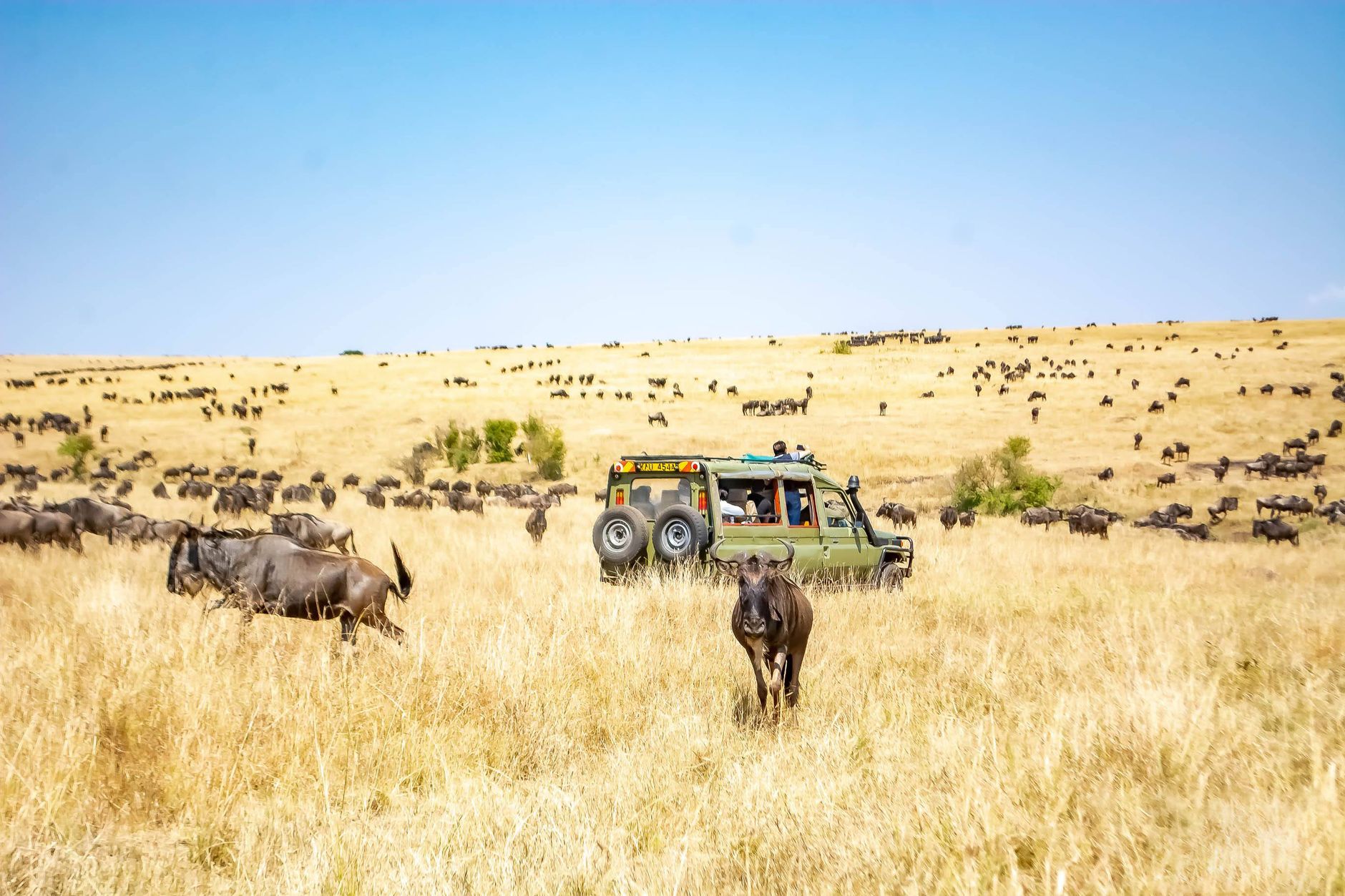
The Great Migration is the largest overland mammal movement on earth: more than 1.5 million wildebeest, 200,000 zebra and 350,000 Thomson's gazelle moving in a continuous loop between the Serengeti in Tanzania and the Maasai Mara in Kenya, in pursuit of fresh grazing. The Mara phase — typically from July to October — is when the spectacle reaches its most dramatic peak, with herds crossing the crocodile-filled Mara and Talek rivers in chaotic, thundering pulses.
This guide explains how the migration actually works, when to plan a trip around it, where to stay for the best access, and how to manage your expectations.
How the migration actually moves
The migration is not an event. It's a year-round circuit driven by rainfall and grass quality. Wildebeest calve in the southern Serengeti's short-grass plains in February, then move steadily northwest through the central Serengeti from March to June, cross the Grumeti River in late June and July, push north into the Mara from July onwards, and eventually loop back south as the rains return in November.
The Mara phase is the most photographed because the herds are concentrated in a smaller area and the river crossings are visible and dramatic. But the herds don't all arrive at once, they don't all leave at once, and the famous crossings happen unpredictably — sometimes daily for a week, sometimes not for ten days at a stretch.
Month-by-month in the Mara
July: First herds typically arrive in the Mara Triangle (the western side of the reserve). Crossings begin at the Mara River. Numbers build through the month.
August: Peak migration density in the central and northern Mara. River crossings are most frequent. Lodges fully booked — secure accommodation 9–12 months in advance.
September: Continued strong presence. Many travellers consider this the best month overall: full migration density, slightly fewer vehicles than August, and predator activity at its peak.
October: Herds begin moving south. Late October crossings (back across the Mara River, this time southward) can be spectacular. Last good month for migration-focused trips.
November–June: Migration is in Tanzania. The Mara still has exceptional resident game — lion prides, leopard, cheetah, elephant, buffalo — but no migrating herds.
The river crossings
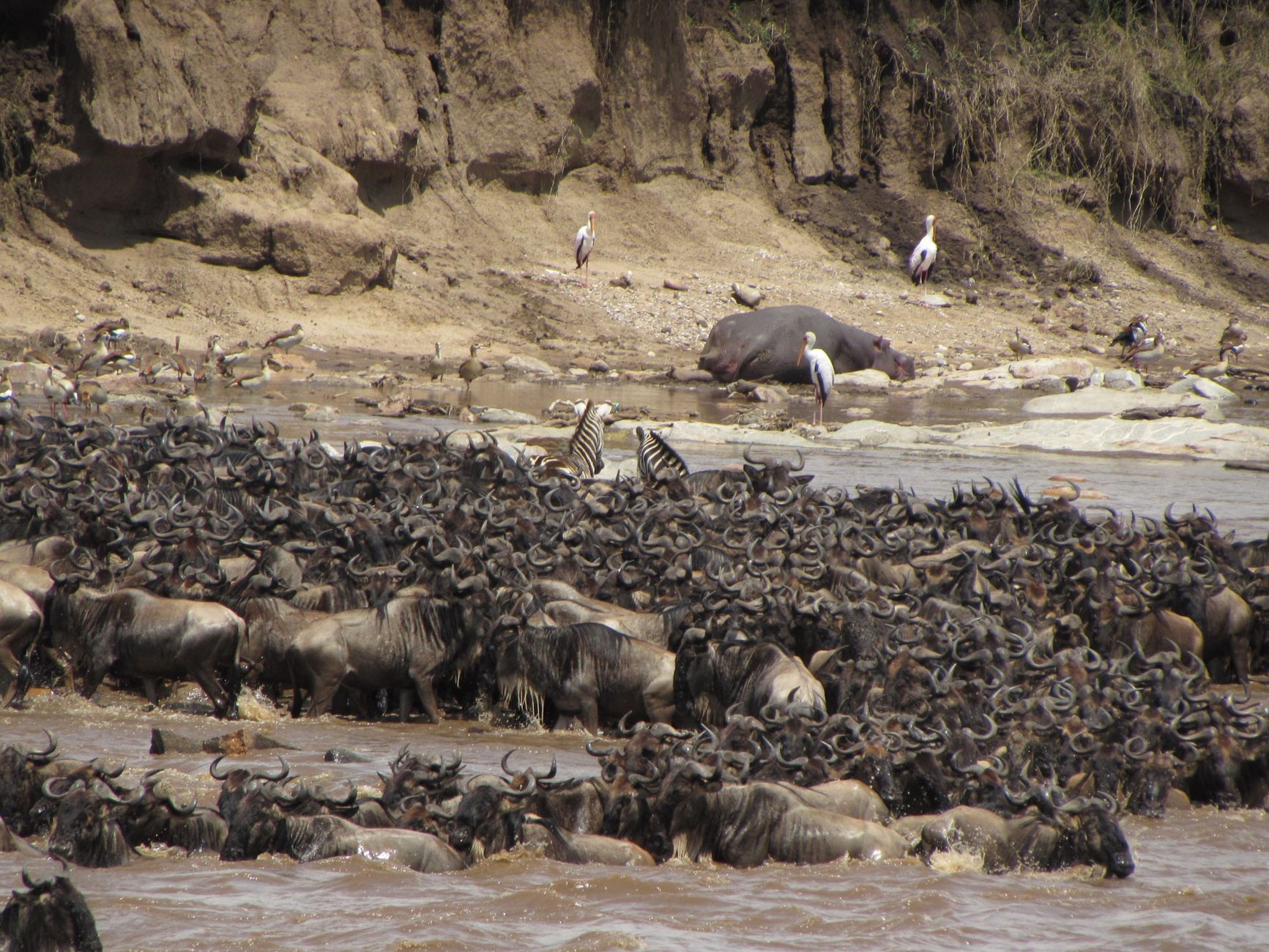
This is what most travellers come for. A crossing happens when a critical mass of wildebeest builds up at the riverbank, hesitates, and then — triggered by some unknowable signal — plunges in. Crocodiles wait in the deep pools. Currents sweep calves downstream. The chaos can last anywhere from ten minutes to several hours.
Crossings are unpredictable. They happen most often at known crossing points (Crossing 1, 2, 3, 4, 5 along the Mara River, and Lookout Hill on the Talek), and good guides will radio each other constantly during peak season. But on any given day there may be no crossing at all. To maximise your chances, build at least four full days into the Mara during peak season — three or fewer is gambling.
Where to stay
Lodge choice matters enormously in the Mara. Three things to consider:
Reserve vs conservancy. The main Maasai Mara National Reserve has the highest concentration of wildebeest during migration but also the highest concentration of vehicles. The surrounding conservancies — Mara North, Olare Motorogi, Naboisho, Mara Triangle, Mara Conservancy — restrict vehicle numbers, allow off-road driving, and permit night drives and walking safaris. Most experienced safari travellers stay in a conservancy.
Location within the reserve. If you do stay in the reserve, the Mara Triangle (managed separately by the Mara Conservancy) is dramatically less crowded than the eastern reserve. The Mara North conservancy is the closest conservancy option to the main river crossing points.
Camp style. Mobile tented camps that follow the migration offer the most authentic experience. Established conservancy camps offer more comfort. Reserve lodges are typically bigger and busier.
Standout camps for migration season: Angama Mara (Mara Triangle, spectacular setting), Mara Plains Camp (Olare Motorogi), Naboisho Camp (Naboisho conservancy), Sala's Camp (southern reserve, excellent migration access), and Saruni Mara (Mara North, smaller and more intimate).
What it costs
Migration season is the most expensive time to visit Kenya. Conservancy camps run $700–$2,500 per person per night all-inclusive during peak August–October. Reserve lodges are $400–$1,000. Add domestic flights, park fees ($200 per person per day for the conservancies, $80 per day for the reserve), and tips, and a 4-night Mara stay during migration typically lands at $5,000–$12,000 per person for the safari portion alone.
Shoulder season (early July or November) saves 20–30% with a real chance of seeing migration herds.
Booking ahead
Migration-season Mara lodges start booking 12 months out and the best ones sell out 9 months in advance. If you want a specific camp for a specific week in August, plan a year ahead. Walk-up bookings during peak migration are essentially impossible.
Beyond the migration
Don't underestimate the Mara outside migration months. Resident lion populations are exceptional. Cheetah are reliably seen. Leopard are easier to find when there's less vehicle competition. January and February deliver clear skies, calving season for the resident wildebeest, and significantly lower prices.
Plan and book your Mara safari
Use SafariStays/Kenya to compare conservancy and reserve camps side by side, see real photography of every property, and enquire directly with the camps. Migration-season inventory moves fast — start your search early and lock in your dates as soon as you've decided.
Ready to plan your trip?
Check live availability, compare lodges and book instantly — or send us an enquiry and we'll help shape the route.