Self-Drive vs Guided Safari: Which Is Right for You?
A practical comparison to help you choose the perfect safari style for your African adventure — covering cost, wildlife experience, flexibility, and what each approach gets wrong.
Introduction: Two Very Different Ways to Experience the Bush
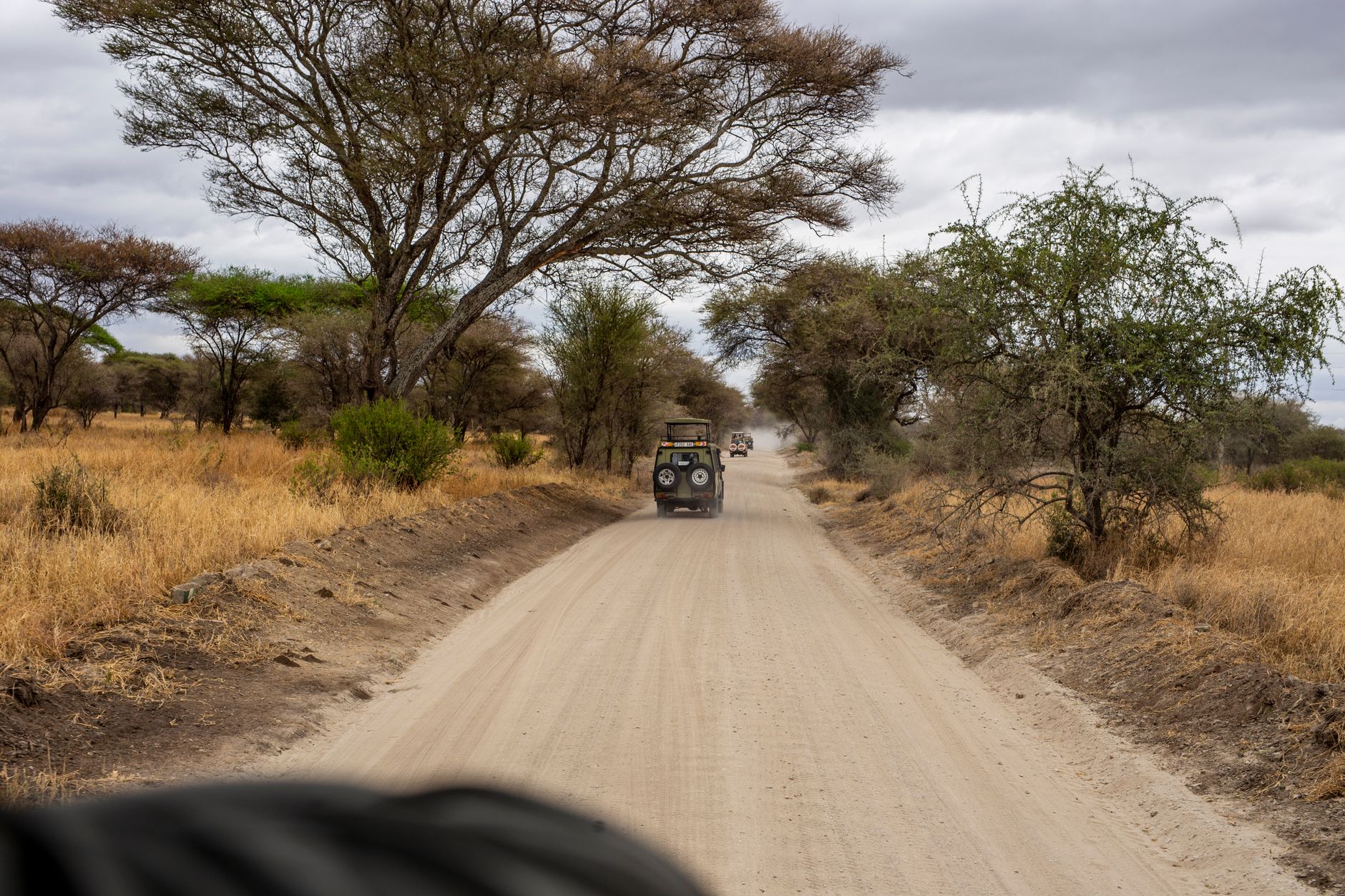
There's a persistent myth that there's only one way to do an African safari: you land, transfer to a lodge, and a khaki-clad guide drives you around in an open Land Rover while you take photos. That's a great experience — but it's not the only one. Across southern Africa, a growing number of travellers are choosing to drive themselves through national parks, booking self-catering rest camps, and setting their own schedules.
Both approaches have genuine merit. Both have real limitations. And the right choice depends heavily on who you are as a traveller — your priorities, your risk tolerance, your budget, and what kind of experience you're actually looking for.
This guide breaks it all down.
What Is a Self-Drive Safari?
A self-drive safari means you rent a vehicle (typically a 4x4 or high-clearance SUV), navigate national park roads independently, and stay in self-catering or basic accommodation within the park — usually operated by the national parks authority.
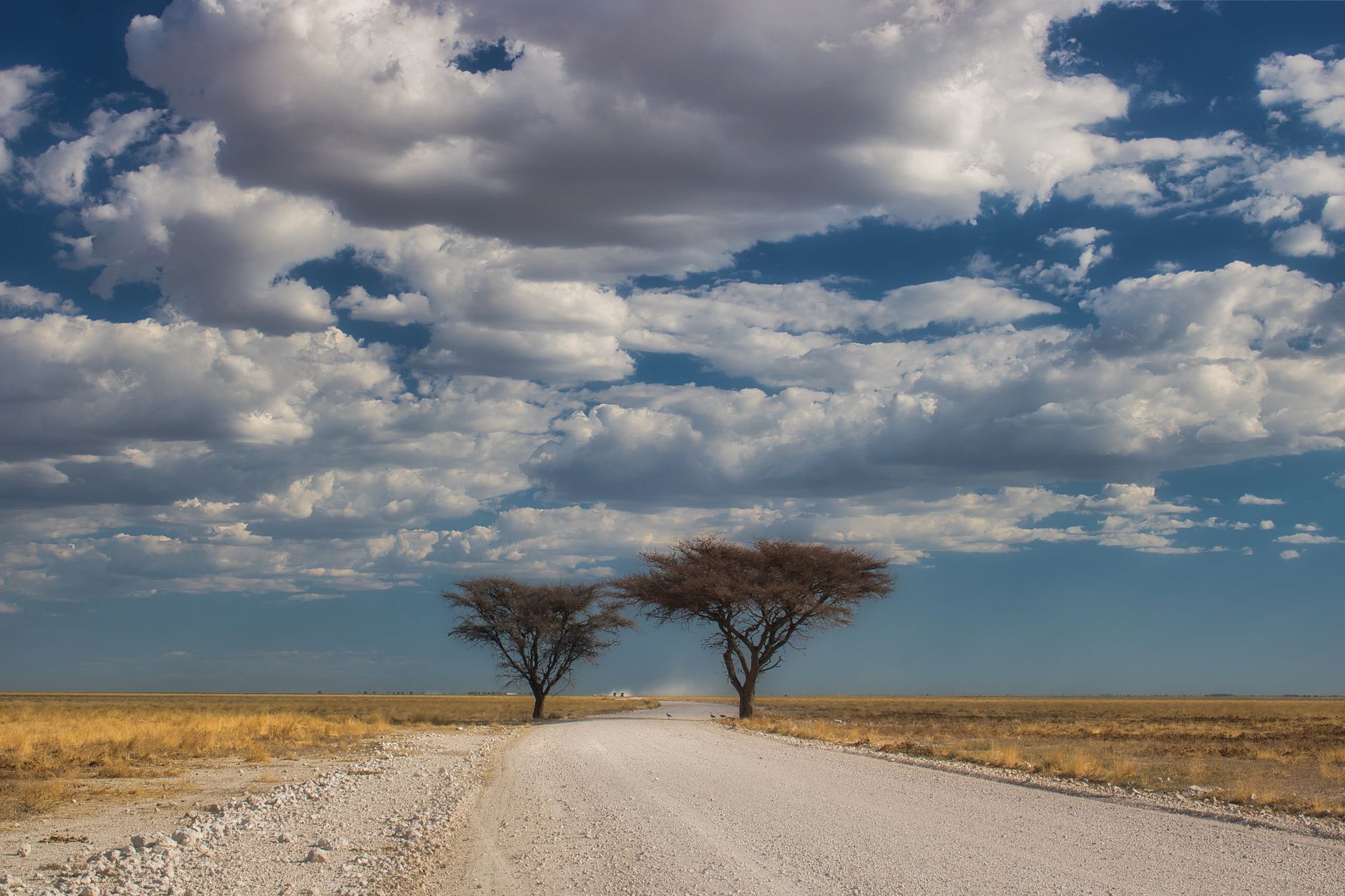
In South Africa, this means SANParks (South African National Parks) rest camps in places like the Kruger National Park, the Kgalagadi Transfrontier Park, or the Hluhluwe-iMfolozi Park. In Namibia, NamibRand and NWR (Namibia Wildlife Resorts) operate camps in Etosha and other parks.
You drive yourself to sightings, use maps and wildlife apps to navigate, make your own meals (or eat at the camp restaurant), and decide entirely when to go out, where to go, and how long to stay at any sighting.
What Is a Guided Safari?
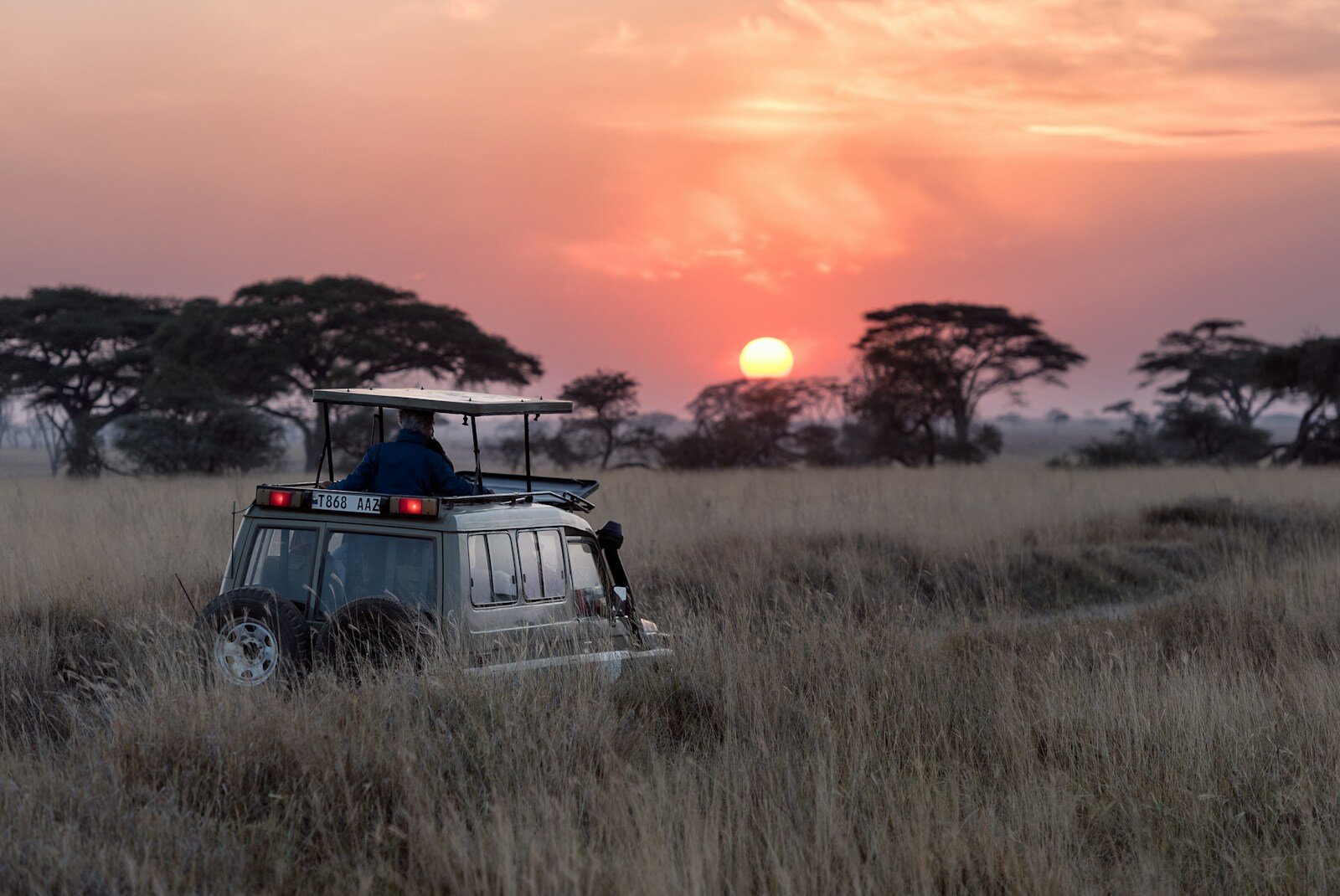
A guided safari means staying at a private lodge or camp where everything is included: guided game drives in open vehicles with a qualified field guide, meals, accommodation, and often drinks. You don't drive yourself anywhere — the guide drives, tracks, and narrates, and your role is to watch, listen, and absorb.
Most guided safari lodges operate two game drives per day: one in the early morning (before and after dawn) and one in the afternoon that extends into darkness with a spotlight. Guides typically have years of training, formal qualifications (in South Africa, through FGASA — the Field Guides Association of Southern Africa), and deep knowledge of the specific reserve.
The Case for Self-Drive Safari
1. Cost
This is the most significant factor for most people. A self-drive safari can cost a fraction of a guided lodge experience. SANParks rest camps in the Kruger National Park, for example, offer fully equipped self-catering bungalows for a fraction of what a mid-range lodge charges per person per night. Add vehicle rental, park fees, and food, and a week in the Kruger on a self-drive can work out to less than two nights at many guided lodges.
For families, the savings are even more dramatic: children at self-catering camps cost very little, while guided lodges often impose minimum age restrictions and charge full adult rates from age 12 or 13.
2. Flexibility and Freedom
On a guided safari, you're working to the lodge's schedule. Drives go out at fixed times. You return when the guide decides. You stop where the vehicle stops.
On a self-drive, you can spend three hours watching a pride of lions without anyone suggesting it's time to head back for dinner. You can take a side road on a hunch. You can leave camp at 5am if you want to catch the light on the waterhole. You can stay in the park for eight days and cover the entire length of the Kruger from south to north.
For travellers who prize independence, this autonomy is not a minor point — it's central to the experience.
3. The Intimacy of Doing It Yourself
There's something qualitatively different about spotting your own animals. When you notice movement in the grass and realise it's a leopard — when you call it, not the guide — the satisfaction is considerable. Self-drive safari rewards attention, patience, and the development of your own fieldcraft over time. Regular visitors to the Kruger often describe it as a skill that deepens with every trip.
4. Longer Trips Are More Feasible
At guided lodge rates, a week is often the practical maximum for most travellers. Self-drive makes two or three weeks in the bush genuinely achievable, which changes the experience entirely. You see the park in its rhythms rather than in highlights.
The Case for Guided Safari
1. Expert Knowledge Changes Everything
A qualified field guide knows things you don't — and those things transform what you see. They know which tree a leopard uses as a marking post, which waterhole has been active at dawn, how to read the age and direction of a lion spoor in the road, and what the alarm call of a francolin means in context.
Even excellent wildlife guides and apps don't replicate this. The difference between self-drive and guided is often the difference between seeing a sighting and understanding it.
2. Off-Road Access
In SANParks (and most self-drive parks), you must stay on designated roads at all times. This is an important conservation rule, but it has a practical consequence: if an animal is 50 metres off the road, you see it at 50 metres. If it then moves further away, it's over.
On a private reserve — the Sabi Sands, the Timbavati, the Waterberg — there are no such restrictions for licensed operators. Guides can drive off-road to position the vehicle perfectly. This is why sightings in the Sabi Sands are so reliably close and prolonged: the vehicle can follow, reposition, and approach from the optimal angle.
3. Night Drives
SANParks doesn't permit private vehicles in the park after dark. Gates close at sunset and don't reopen until sunrise. This means self-drive visitors miss everything that happens at night — which, in terms of predator activity, is a great deal.
Guided lodges on private reserves run spotlit night drives that offer encounters with leopard hunting, lion on a kill, and nocturnal species (civets, genets, honey badgers, aardvarks, porcupines) that daytime drives rarely reveal.
4. Safety and Comfort in the Bush
Walking through the bush on foot is an extraordinary experience — but it is not something you do without an armed, qualified guide. Most guided lodges offer optional bush walks that are simply not available as a self-drive option.
There's also a practical safety dimension to being with a guide when a vehicle breaks down in remote bush, or when you have an unexpected close encounter with an elephant or buffalo on foot near a camp. For travellers who are new to the African bush, a guide's presence is genuinely reassuring rather than restrictive.
5. All-Inclusive Ease
If you're travelling for a special occasion — an anniversary, a honeymoon, a milestone birthday — the logistics of self-catering and self-navigating may not be what you want. Guided lodges handle everything. Your job is to arrive, relax, and be astonished. That's not a trivial thing.
A Direct Comparison
| Factor | Self-Drive | Guided Lodge |
|---|---|---|
| Cost | ★★★★★ (very affordable) | ★★ (significant investment) |
| Wildlife sightings (quality) | ★★★ (road-limited) | ★★★★★ (off-road, guides) |
| Wildlife sightings (quantity) | ★★★★ (your own pace) | ★★★★ (guided expertise) |
| Night drives | ✗ (not available) | ✓ |
| Bush walks | ✗ (not available independently) | ✓ |
| Flexibility | ★★★★★ | ★★ |
| Learning / immersion | ★★★ (self-directed) | ★★★★★ (expert narrated) |
| Family-friendly | ★★★★★ (especially for families) | ★★★ (age restrictions common) |
| Romantic / occasion travel | ★★★ | ★★★★★ |
| Ease of experience | ★★★ | ★★★★★ |
The Best of Both: Combining Approaches
The most satisfying safaris often combine both. A common and highly effective structure:
- Days 1–3: Guided lodge in a private reserve (Sabi Sands, Waterberg, or similar) for the full guided experience — off-road drives, night drives, bush walks, and expert narration.
- Days 4–7: Self-drive in an adjacent or nearby national park (Kruger, Hluhluwe-iMfolozi, or Kgalagadi) for freedom, flexibility, and a different quality of immersion.
This structure gives you the best wildlife sightings and learning of a guided experience, followed by the independence and extended exploration of a self-drive. It also manages the cost — the guided portion is short and intensive; the self-drive portion is longer and more affordable.
Choosing by Traveller Type
First-time safari visitor: Guided lodge, at least for part of the trip. The learning you'll get from a qualified guide in the first two or three days will transform how you see everything else — even if you then go self-drive.
Returning safari traveller: Self-drive is worth exploring seriously. Once you know what to look for and how to read the bush, the independence becomes genuinely rewarding rather than potentially frustrating.
Family with young children: Self-drive is often the better fit. Many private lodges don't accept children under 10 or 12; SANParks rest camps welcome families of all ages. Children who drive themselves to a herd of elephant remember it differently than children who are driven there.
Wildlife photographer: Guided, for the off-road access and positioning. Unless you know the park extremely well, the road restriction of self-drive significantly limits the quality of shots available.
Budget-conscious traveller: Self-drive, without question. A week in the Kruger self-driving can cost less than a single night at many guided lodges.
Romantic / honeymoon trip: Guided, without question. The privacy, the meals, the service, the sundowners — the romance of a well-run safari lodge is very difficult to replicate in a self-catering rest camp.
Adventure / road-trip traveller: Self-drive, ideally across multiple parks and countries. A self-drive route through South Africa and Namibia — Kruger to Hluhluwe to iSimangaliso, or north through Botswana into Namibia — is one of the great overland adventures in the world.
Practical Tips for Self-Drive Safari
If you decide to go self-drive, here's what will actually make the difference:
- Get a 4x4 or high-clearance vehicle. Especially important outside of main park roads, in the Kgalagadi or northern Namibia. Standard sedans can manage the Kruger's tar roads, but you'll miss significant areas.
- Book SANParks rest camps well in advance. Popular camps in the Kruger — Skukuza, Berg-en-Dal, Olifants — book out months ahead, particularly during school holidays. The SANParks reservations system opens 11 months in advance and fills quickly.
- Download offline wildlife apps. iNaturalist, Seek, and the SANParks app are all useful. Also download offline maps for your route before you enter the park, where cell coverage can be patchy.
- Start early, end late. The best wildlife activity is in the first two hours after dawn and the last ninety minutes before sunset. The middle of the day is for a camp rest, a cold drink, and watching the weavers at the bird feeder.
- Stay still. Inexperienced self-drive visitors make the mistake of driving constantly. Stopping at a promising waterhole or riverine thicket for 30 minutes — engine off, windows down, absolutely quiet — is often how the best sightings happen.
- Learn the bird alarm calls. The sharp, repetitive alarm call of an oxpecker, the staccato warning of a plover, the panicked chatter of a francolin: these are the bush telegraph. Animals moving near you announce themselves to birds before they announce themselves to you.
Practical Tips for Guided Safari
- Ask about guide experience. The best lodges will happily tell you how long their guides have been operating in that specific reserve, what their FGASA rating is, and what their specialisations are. A guide who has spent ten years in the Sabi Sands knows things a recently qualified guide does not.
- Request a specific guide if possible. Some lodges allow — or even encourage — guests to request their preferred guide after the first drive. If you click with a particular guide, ask to stay with them.
- Go to the early morning drive. Many guests skip the 5:30am wake-up. Don't. Dawn is when the bush is most alive, most dramatic, and most photogenic — and there are fewer vehicles at sightings.
- Ask questions constantly. A good guide wants to be asked questions. This is what they trained for. The richer your engagement, the richer their explanation. Don't sit quietly waiting for the next animal — ask about the tree, the bird, the dung beetle, the cloud formation.
- Consider shoulder season. October and November in South Africa are excellent months — very few other visitors, strong predator activity, and the first summer rains bring the bush back to vivid life. Rates at many lodges drop significantly in the shoulder months.
Book Your Safari with Safari Stays
Whether you're planning a self-drive adventure through Namibia or a guided luxury experience in the Sabi Sands, Safari Stays connects you with quality-vetted properties across southern Africa.
Browse our self-drive-friendly accommodations in national parks and conservancies, or explore our curated selection of guided lodges — from intimate owner-operated camps to world-class safari properties.
Find your perfect safari accommodation →
Tags: self-drive safari South Africa, guided safari vs self-drive, Kruger Park self-drive tips, safari planning guide, Etosha self-drive, Sabi Sands guided safari, SANParks rest camps, best safari for families, honeymoon safari Africa, South Africa safari 2025 2026
Ready to plan your trip?
Check live availability, compare lodges and book instantly — or send us an enquiry and we'll help shape the route.