Addo Elephant Park & the Eastern Cape: South Africa's Most Underrated Safari Destination
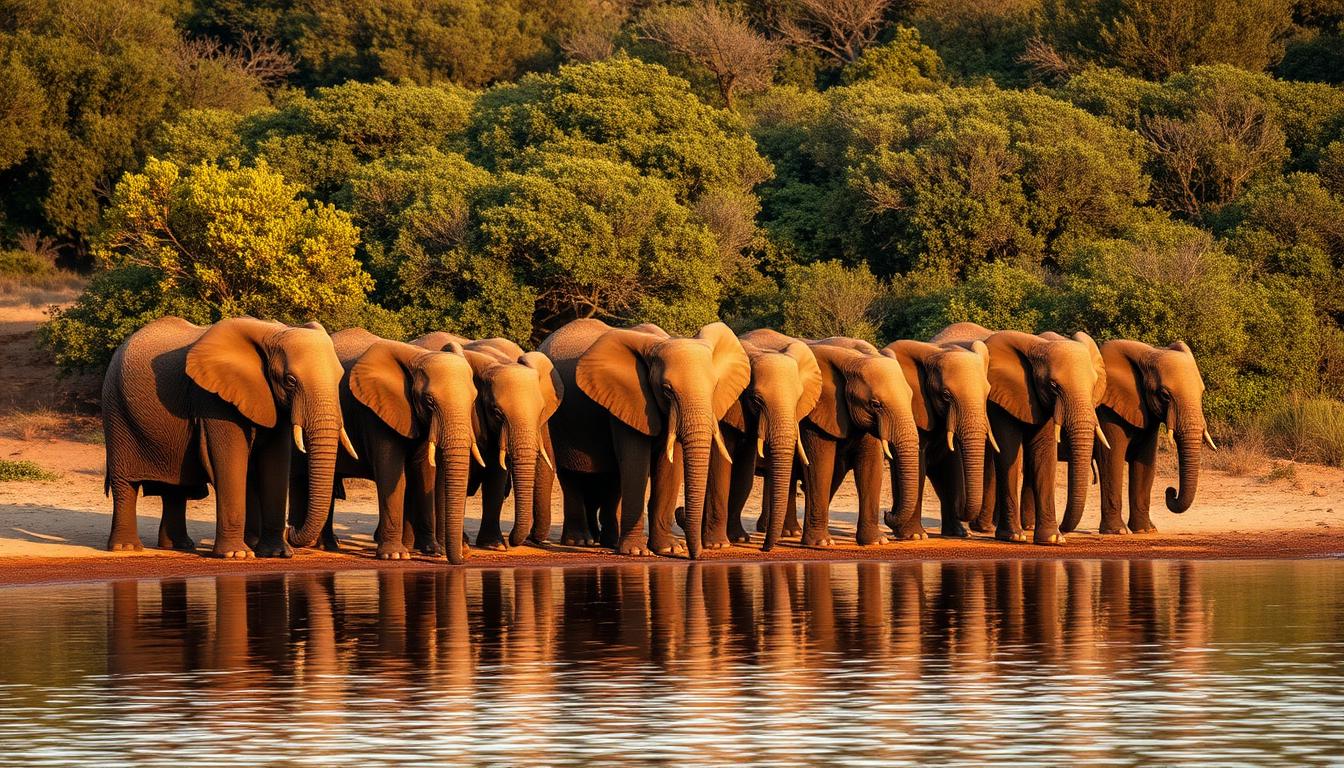
Ask most international travellers to name South Africa's premier safari destination and they will say Kruger without hesitation. That instinct is understandable — Kruger is iconic. But it means that one of Africa's most remarkable wildlife experiences remains largely off the radar for first-time visitors from the UK, US, and Europe: the Eastern Cape.
The Eastern Cape is home to Addo Elephant National Park — the third-largest national park in South Africa and one of the only places on earth where you can see the Big Seven in a single destination. It is entirely malaria-free. It is extraordinarily family-friendly. And it sits at the eastern end of the celebrated Garden Route, making it a natural anchor for one of South Africa's great road trip itineraries.
🌍 The Eastern Cape is not a consolation prize for travellers who couldn't get into Sabi Sands. It is a destination that stands completely on its own terms — and increasingly, seasoned safari travellers are choosing it first.
🌿 Why the Eastern Cape Deserves Its Own Safari Trip
The Big Seven — Not Just the Big Five
Addo Elephant National Park and the private game reserves of the Eastern Cape offer something Kruger cannot: a genuine Big Seven experience. In addition to the classic Big Five — lion, leopard, elephant, rhino, and buffalo — the Eastern Cape's coastal waters are home to both southern right whales and great white sharks. Port Elizabeth (now officially Gqeberha) and the Algoa Bay coastline are among the world's premier great white shark cage diving destinations, while southern right whales breach regularly off the Eastern Cape coast between June and November. No other safari destination on the African continent combines terrestrial Big Five wildlife with these two marine giants.
The Eastern Cape is entirely outside South Africa's malaria transmission zones. No prophylaxis required, no mosquito nets essential, no health anxiety — making it the standout choice for families with young children, travellers with health considerations, and anyone who prefers not to take antimalarial medication.
Big Five Without the Crowds
Kruger's southern section — the most accessible and most visited part of the park — sees enormous visitor volumes during peak season, particularly in July and over the December holidays. Game drives can feel more like a traffic queue than a wilderness experience when multiple vehicles converge on a lion sighting. The Eastern Cape's private game reserves and Addo itself operate on a fundamentally different scale. Game drives here are intimate, unhurried, and genuinely immersive — the kind of experience that reminds you what a safari is supposed to feel like.
Family-Friendly Safari, Done Properly
Many of Africa's top safari destinations impose minimum age restrictions — typically 6 to 12 years old — on game drives for safety and liability reasons. The Eastern Cape is one of the few regions in southern Africa where genuinely family-friendly safaris, with no minimum age, are widely available. The malaria-free environment removes the medication question for parents of young children entirely. Combined with shorter drive times from Johannesburg or Cape Town than Kruger, it is the most practical Big Five safari option for families travelling with children.
Value for International Visitors
The Eastern Cape's private game reserves consistently offer all-inclusive Big Five safari experiences at rates meaningfully below comparable properties in the Sabi Sands or Timbavati. For international visitors from the UK, US, and Europe, the combination of the rand's exchange rate and the Eastern Cape's relative value positioning makes this one of the most cost-effective luxury safari destinations in Africa.
🐘 Addo Elephant National Park: What to Know
Scale and Location
Addo Elephant National Park covers nearly 200,000 hectares across a diverse range of habitats — from the dense, thorny Eastern Cape thicket of the main game area to the marine protected area off the coast, which incorporates St Croix Island (home to Africa's largest colony of African penguins) and Bird Island. The park's main entrance gate is approximately 72 kilometres north of Port Elizabeth / Gqeberha, making it one of the most easily accessible major national parks in South Africa for fly-in international visitors.
Wildlife in Addo
Addo was originally established in 1931 to protect the last surviving elephants of the Eastern Cape — just eleven animals at the time. Today the park is home to over 600 elephants, making it one of the highest-density elephant populations on earth. Sightings are virtually guaranteed, often at close range. Lion were reintroduced to the park in 2003 and have thrived; leopard are present throughout the thicket but, as always, elusive. Both black and white rhino are found in the park, as are buffalo, spotted hyena, black-backed jackal, and a remarkable diversity of antelope including kudu, eland, red hartebeest, and the endemic Cape grysbok.
Birdwatching in Addo
The Eastern Cape is one of South Africa's premier birdwatching destinations, and Addo is no exception. Over 400 bird species have been recorded in the park and its surroundings, including the secretarybird, martial eagle, Verreaux's eagle, and a strong selection of Eastern Cape endemics. The coastal section of the park adds seabirds, African penguins, and Cape gannets to the list — an extraordinary birding combination for international visitors.
Self-Drive vs. Guided Game Drives in Addo
Like Kruger, Addo's main section is open to self-drive visitors who pay a daily conservation fee. The road network is well-maintained and navigable in a standard hire car. SANParks also operates guided game drives departing from the main rest camp, which are strongly recommended for first-time visitors unfamiliar with reading the dense Eastern Cape thicket. Private game reserves bordering Addo offer the full guided, all-inclusive lodge experience with open vehicle game drives, night drives, and bush walks — activities not available to self-drive visitors in the public park.
🏕️ Beyond Addo: The Eastern Cape's Private Game Reserves
Some of South Africa's finest private game lodges are located in the Eastern Cape, yet they remain far less well-known internationally than their Sabi Sands counterparts. These reserves offer Big Five game drives in malaria-free wilderness, guided by some of the country's most experienced field guides:
🌿 Shamwari Private Game Reserve
One of South Africa's most celebrated private game reserves, Shamwari is home to all of the Big Five in a 25,000-hectare malaria-free wilderness. Multiple lodges within the reserve cater to different budgets and group sizes, from family-focused camps to ultra-luxury suites. It also hosts a Born Free wildlife rehabilitation centre, adding a conservation dimension to the experience.
🦁 Kariega Game Reserve
A family-owned Big Five reserve situated on the banks of the Kariega and Bushmans rivers, offering a genuinely intimate safari experience. Kariega is known for its exceptional elephant and rhino sightings, its commitment to anti-poaching conservation, and its warm, personalised hosting style that larger reserves struggle to match.
🌊 Kwandwe Private Game Reserve
Spanning over 22,000 hectares along the Great Fish River, Kwandwe is one of the Eastern Cape's most exclusive private wildlife destinations. It is home to all of the Big Five plus cheetah and wild dog — two species rarely encountered in the same reserve. The landscape of sweeping river valleys and open plains creates a dramatically different visual experience from the Kruger bushveld.
🐆 Lalibela Game Reserve
Bordering Addo to the south, Lalibela offers Big Five safari experiences across four separate camps in malaria-free thicket country. Its proximity to the Garden Route makes it an ideal first or last stop on a road trip combining the Eastern Cape safari experience with the coastal highlights between Port Elizabeth and Cape Town.
📅 Best Time to Visit Addo & the Eastern Cape
One of the Eastern Cape's significant advantages over Kruger is its year-round accessibility. The region does not have a pronounced dry season that dramatically concentrates wildlife around water sources in the way that Kruger's winter does — but each season has its own distinct character and appeal:
🌞 Summer: November – February (Best Wildlife Viewing)
Hot, occasionally humid, with afternoon thunderstorms. The bush is lush and green. Newborn animals are abundant — impala lambs, elephant calves, and buffalo calves make for exceptional wildlife photography. Whale shark sightings off the coast peak in this period. Accommodation rates are generally lower than the Cape Town summer peak.
🐋 Winter: June – September (Whale Season)
Cooler, dry, and ideal for game drives — comfortable temperatures with clear light that photographers love. Southern right whales arrive in Algoa Bay from June, and great white shark cage diving conditions are at their best. Game viewing is excellent as vegetation thins. This window also aligns perfectly with peak UK and European holiday periods.
🍂 Autumn: March – May (All-Round Value)
Arguably the most underrated time to visit. The summer heat has passed, the bush is still green, and accommodation rates drop. Wildlife viewing is excellent, crowds are minimal, and the light in the late afternoon is superb for photography. April and May represent some of the best-value safari travel available in southern Africa.
🌸 Spring: September – October (Spring Wildflowers)
The Eastern Cape's spring is spectacular. Wildflowers bloom across the thicket and surrounding landscapes, migratory birds return, and the energy of the bush shifts noticeably as the season changes. An ideal shoulder period that combines excellent game viewing with the visual drama of the landscape in transition.
✈️ Getting to the Eastern Cape
Flying In: Port Elizabeth / Gqeberha
Chief Dawid Stuurman International Airport in Port Elizabeth (Gqeberha) is the primary gateway for the Eastern Cape safari region. It receives multiple daily domestic flights from Johannesburg (approximately 1.5 hours) and Cape Town (approximately 1 hour 20 minutes). Several airlines operate these routes, keeping fares competitive. For international visitors, the typical routing is long-haul into OR Tambo in Johannesburg or Cape Town International, followed by a short domestic connection to Port Elizabeth.
The Garden Route Drive
Port Elizabeth sits at the eastern terminus of the Garden Route — one of South Africa's most celebrated road trip corridors. The drive from Cape Town to Port Elizabeth along the N2 takes approximately seven to eight hours without stops, but most visitors spread it over two or three days, overnighting in Wilderness, Knysna, or Plettenberg Bay along the way. This makes the Eastern Cape and Addo a natural end-point for visitors who want to combine a Garden Route road trip with a Big Five safari experience without backtracking.
Self-Drive from Port Elizabeth to Addo
The drive from Port Elizabeth city centre to Addo's main camp takes just over an hour on good tarred roads. No 4x4 is required for Addo's main game viewing area. Car hire is widely available at Port Elizabeth airport, and most private game reserves in the region offer complimentary transfers from the airport for guests.
🗺️ Sample Eastern Cape & Addo Itineraries
10 Nights: Garden Route & Big Five
Nights 1–2: Arrive Cape Town. City orientation, Table Mountain, V&A Waterfront.
Night 3: Drive the N2 east. Overnight in Wilderness or George on the Garden Route.
Night 4: Knysna — the Heads, lagoon boat trip, Featherbed Nature Reserve.
Night 5: Plettenberg Bay — whale watching (seasonal), Robberg Peninsula hike.
Night 6: Tsitsikamma National Park — suspension bridge, Storms River gorge.
Nights 7–10: Eastern Cape private game reserve (Shamwari, Kariega, Kwandwe, or Lalibela) — all-inclusive Big Five safari, malaria-free. Fly home from Port Elizabeth.
7 Nights: Focused Eastern Cape Safari & Coast
Nights 1–3: Private Big Five game reserve adjacent to Addo — guided game drives, night drives, bush walks. All inclusive.
Night 4: Self-drive day in Addo Elephant National Park. Afternoon at leisure in Port Elizabeth.
Night 5: Great white shark cage diving at Algoa Bay (seasonal), African penguin colony at St Croix Island.
Nights 6–7: Plettenberg Bay or Knysna — coastal decompression before flying home via Cape Town or Johannesburg.
5 Nights: Family Safari, Malaria-Free
Nights 1–4: Family-friendly lodge in a private Eastern Cape reserve. No minimum age restrictions. Daily game drives tailored to younger guests, swimming pool, children's ranger activities, conservation education programmes.
Night 5: Port Elizabeth — African penguin beach visit, beachfront relaxation before departure.
🏨 Eastern Cape Accommodation: What to Expect
💎 Luxury Private Game Lodges
All-inclusive stays at Eastern Cape private reserves typically include twice-daily open vehicle game drives with an experienced field guide and tracker, all meals and selected beverages, bush walks, and night drives. Standards at the top tier — Shamwari's Eagle's Crag, Kwandwe's Ecca Lodge, and Kariega's River Lodge — are genuinely world-class and draw international guests who might otherwise only consider the Sabi Sands. Rates are meaningfully lower than comparable Sabi Sands properties.
🌿 Mid-Range Game Lodges & Tented Camps
The Eastern Cape has a strong mid-range safari offering — tented camps and smaller lodges that deliver the full guided Big Five experience at rates accessible to a broader range of international budgets. This tier is particularly well-suited to families and groups of friends seeking the safari experience without the ultra-luxury price point.
🏕️ SANParks Rest Camps in Addo
Addo's SANParks-operated rest camp offers chalets, rondavels, and camping for self-drive visitors. The camp has a restaurant, shop, and swimming pool. Elephant frequently wander through the camp perimeter fence, making even a rest stop at camp a wildlife experience. Bookings through the SANParks reservation system are essential, particularly for school holidays.
🏘️ Port Elizabeth / Gqeberha City Accommodation
For visitors using Port Elizabeth as a base for day trips into Addo or cage diving excursions, the city offers a range of guesthouses, boutique hotels, and beach-facing accommodation along the Summerstrand beachfront. The city is far more pleasant than its reputation suggests and serves as an excellent logistical hub for Eastern Cape exploration.
❓ Frequently Asked Questions: Eastern Cape Safari
Is Addo Elephant National Park really malaria-free?
Yes. The entire Eastern Cape province, including Addo Elephant National Park and all of the region's private game reserves, falls outside South Africa's malaria transmission zones. No malaria prophylaxis is required for travel to this region. This is one of the Eastern Cape's most significant advantages for international families, travellers with health considerations, and anyone who prefers to avoid antimalarial medication.
How does Addo compare to Kruger for a first-time safari visitor?
Both are exceptional, but they offer fundamentally different experiences. Kruger's scale is unmatched — nearly two million hectares with enormous species diversity. Addo is smaller and more intimate, with extraordinarily high elephant density and a malaria-free environment. For families with children, travellers combining a safari with the Garden Route, or visitors seeking Big Five without the peak-season Kruger crowds, the Eastern Cape is often the stronger choice. For pure wildlife diversity and the classic African bush experience, Kruger's scale is hard to beat.
What is the Big Seven, and where can I see it?
The Big Seven extends the traditional Big Five — lion, leopard, elephant, rhino, and buffalo — to include southern right whales and great white sharks. The Eastern Cape is the only region in Africa where all seven can realistically be encountered in a single visit: the Big Five on land in Addo or a private reserve, whales in Algoa Bay (June to November), and great white sharks via cage diving off Port Elizabeth or further along the coast.
Can I combine Addo with Cape Town on one trip?
Absolutely — it is one of South Africa's most popular international itinerary combinations. The typical approach is to fly into Cape Town, drive the Garden Route east over several days, and end with a Big Five safari in the Eastern Cape before flying home from Port Elizabeth. Alternatively, fly into Johannesburg, do Kruger first, then fly to Port Elizabeth for an Eastern Cape safari finish before connecting to Cape Town for a city and Winelands stay. Both work extremely well.
Are there age restrictions on game drives in the Eastern Cape?
Most private game reserves in the Eastern Cape welcome children of all ages, which is notably different from many Kruger-area private reserves that impose minimum age requirements of 6 to 12 years. Some reserves offer dedicated children's ranger programmes, family-suite accommodation, and game drives specifically designed for younger guests. Always confirm minimum age policies with your chosen lodge at the time of booking.
How do I get from Cape Town to Addo?
The most efficient option for international visitors is a domestic flight from Cape Town International to Port Elizabeth (approximately 1 hour 20 minutes), followed by a lodge transfer or hire car to Addo or your private reserve. The Garden Route self-drive — approximately 7–8 hours of driving spread over 2–3 days — is the more scenic alternative and is highly recommended if your itinerary has the time for it.
Discover the Eastern Cape with Safari Stays South Africa
The elephants of Addo are waiting. The whales are breaching in Algoa Bay. The thicket is alive with leopard and lion. Let Safari Stays South Africa help you plan the Eastern Cape safari that international travel guides are only just beginning to talk about.
Plan My Eastern Cape SafariReady to plan your trip?
Check live availability, compare lodges and book instantly — or send us an enquiry and we'll help shape the route.


