Etosha National Park: When to Visit, Month by Month
Etosha National Park Season by Season: When to Visit for the Best Wildlife
Etosha National Park is one of Africa's greatest wildlife destinations — a vast salt pan surrounded by savannah, thornbush and mopane woodland, where elephants, lions, rhinos, giraffes and cheetahs converge on floodlit waterholes. But timing your visit makes an enormous difference to what you'll see and experience. This season-by-season guide helps you choose the best time to visit Etosha National Park for your self-drive safari.
Why Timing Matters in Etosha
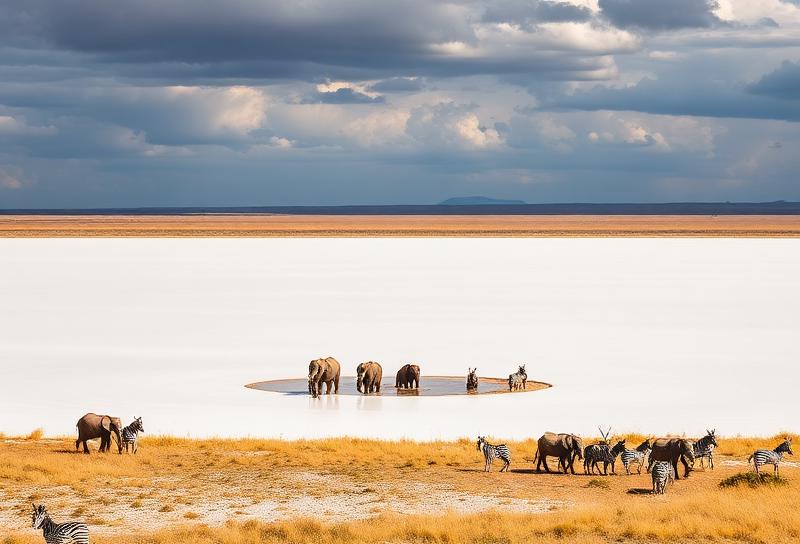
Unlike many African parks where wildlife disperses widely across thick bush, Etosha's defining characteristic is its central salt pan — a 4,800 km² white expanse almost devoid of life. Animals are forced to drink at a relatively small number of waterholes dotted around the pan's edge, which makes sightings remarkably concentrated and predictable. The season determines how much water is available elsewhere in the park — and therefore how dependent animals are on those waterholes.
Dry Season (May to October) — Peak Wildlife Viewing
The dry season is when Etosha delivers its most spectacular game viewing, and it is by far the most popular time to visit.
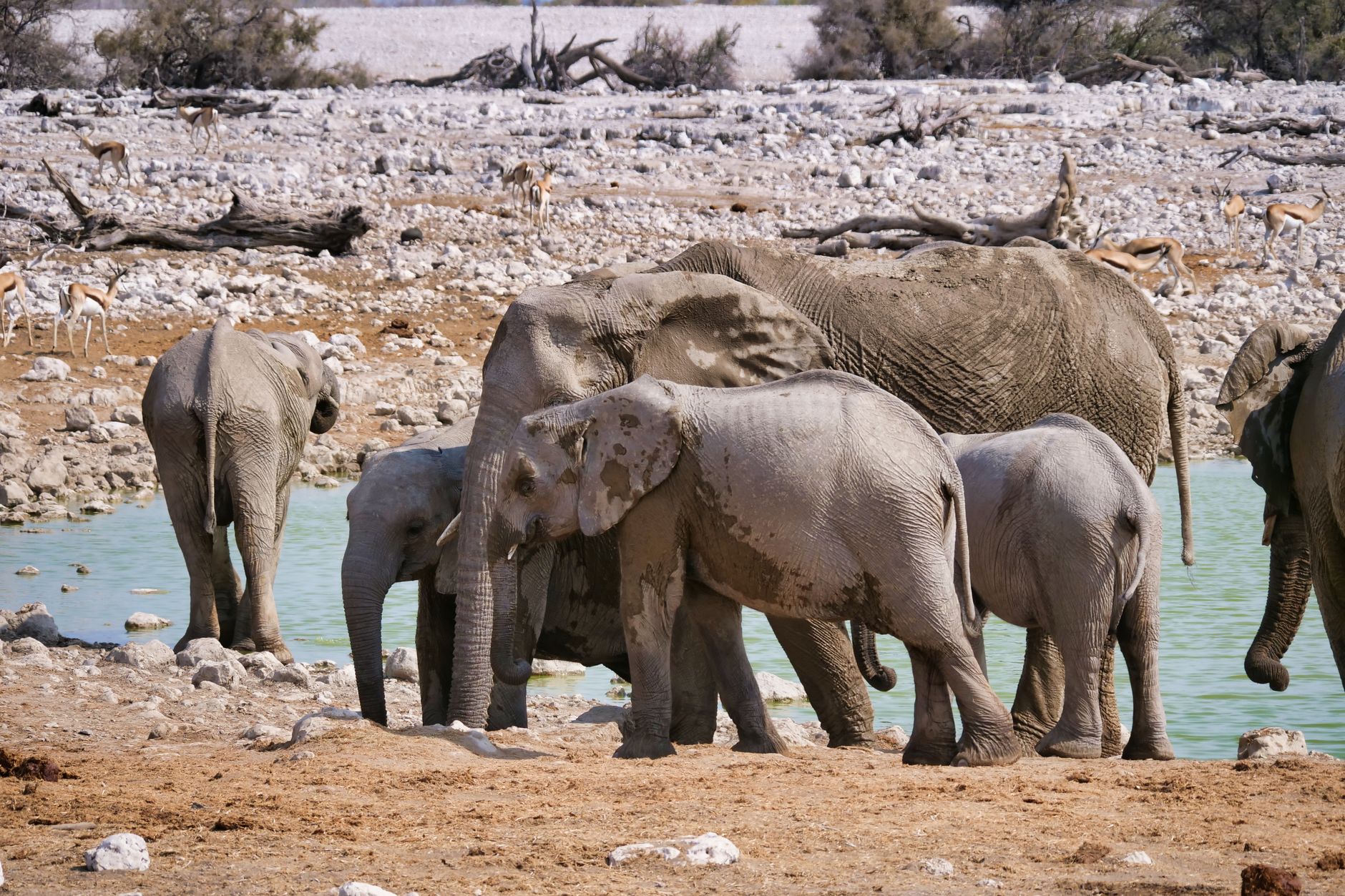
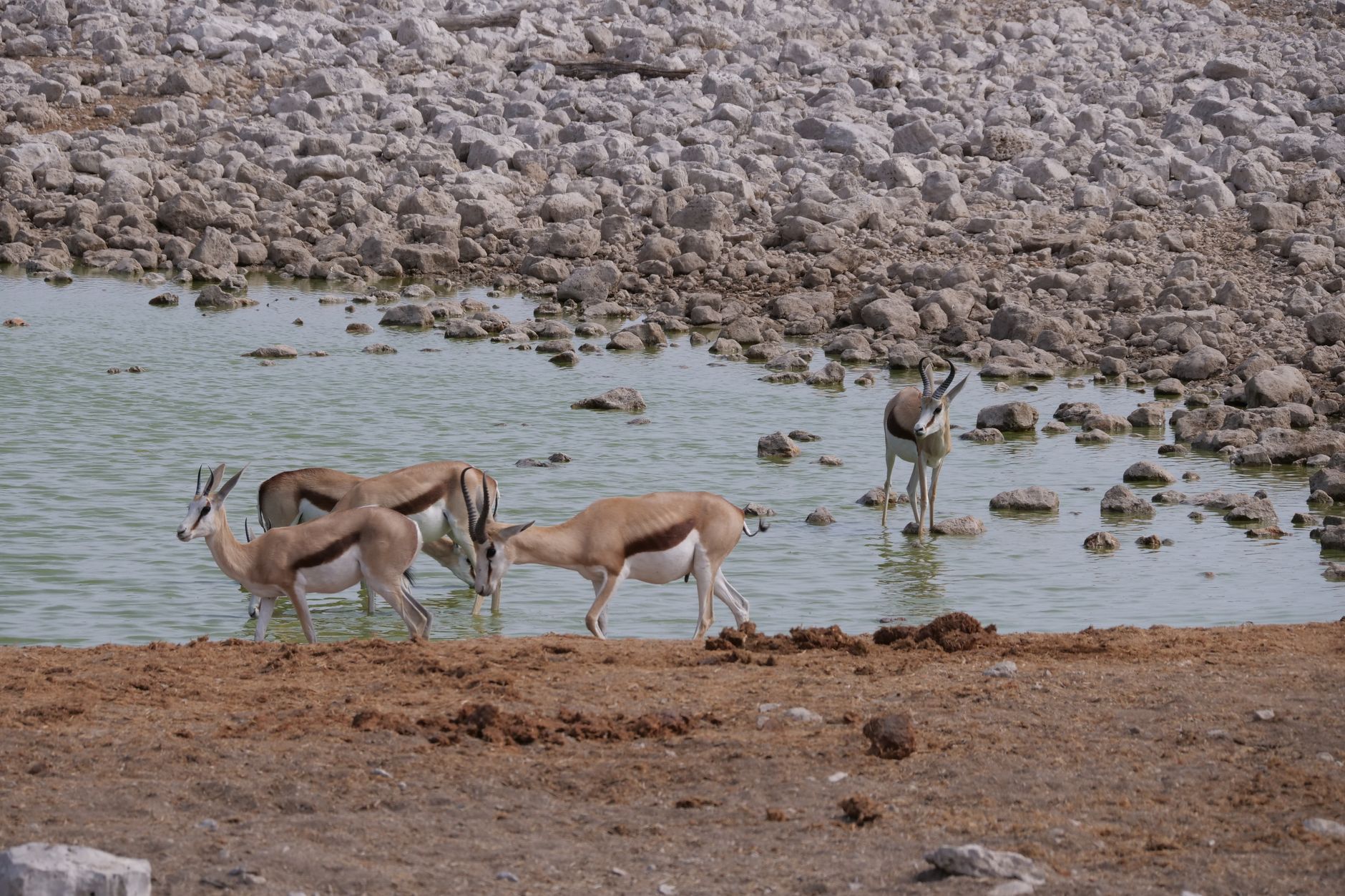
As surface water dries up across the park from May onwards, animals have no choice but to visit the permanent waterholes — some of which are floodlit overnight. Concentrations of wildlife at these points become extraordinary by August and September. It is not unusual to watch hundreds of zebra, wildebeest and springbok arrive at a waterhole simultaneously, with predators close behind.
May to June offers cooler temperatures, green vegetation beginning to fade, and the start of peak wildlife activity at waterholes. Crowds are moderate and prices are reasonable relative to the peak months.
July to September is high season. Days are warm and sunny, nights are cold, and wildlife viewing reaches its annual peak. The Okaukuejo waterhole — floodlit and accessible directly from the camp — is famous for late-night rhino sightings. Book accommodation many months in advance for this window. The park's camps and private lodges fill quickly.
October is the hottest month of the dry season, with temperatures regularly exceeding 38°C. Wildlife is highly concentrated around the last remaining water sources, making game drives intense and rewarding — but heat during the middle of the day is significant. It is one of the best months for lion and cheetah sightings.
Green Season (November to April) — A Different Etosha
The wet season transforms Etosha into a completely different landscape. Rain arrives from November and continues sporadically through April, turning the bush lush and green and filling temporary pans across the park.
This is the season most travellers overlook — and that is their loss.
November to January sees the first rains arrive. Migratory bird species flood in from the north, making this the best time for birdwatching in Etosha — over 340 species have been recorded in the park. Young animals are born during these months, and predator activity around nursery herds can be exceptional.
February to April is peak green season. Wildlife disperses more widely as surface water becomes plentiful, which means fewer animals at any given waterhole. However, the landscape is visually stunning, crowds are thin, and lodge rates drop considerably. Experienced safari travellers who prioritise atmosphere and photography over concentrated game drives often prefer this period.
One important note: the Etosha pan itself occasionally fills with shallow water during exceptional rainfall years, attracting thousands of flamingos. This is rare but extraordinary when it happens.
The Waterholes: Where the Magic Happens
Etosha's waterholes are the centrepiece of any self-drive visit. The most productive for game viewing during the dry season include:
Okaukuejo — Inside the camp itself, floodlit through the night. One of Africa's best waterholes for black rhino sightings. Multiple species often visit simultaneously.
Halali — A mid-park waterhole and rest camp. Lions are regularly sighted here, particularly at night.
Chudob — A reliable waterhole near Namutoni in eastern Etosha, known for large elephant herds.
Goas — Often overlooked but consistently productive for lion and leopard in the dry season.
Klein Namutoni — Excellent for elephant and buffalo sightings in the green season.
The self-drive experience in Etosha means you set your own pace between waterholes — linger as long as you like when you find something interesting.
How Many Days Should You Spend in Etosha?
A minimum of two nights allows you to cover the western section of the park (Okaukuejo and surrounds) adequately. Three nights is the sweet spot for most self-drive travellers — enough time to explore both western and central Etosha and spend proper time at multiple waterholes at different times of day. Four or more nights opens up eastern Etosha around Namutoni and the Andoni area, which sees far fewer visitors.
Where to Stay in Etosha
Accommodation falls into two categories: the NWR rest camps (Okaukuejo, Halali, Namutoni and Dolomite) which sit inside the park, and the private lodges which cluster just outside the park gates.
Inside the park, Okaukuejo is the iconic choice — its famous waterhole is steps from your chalet. Namutoni offers a beautiful old fort setting in the eastern park. Both are affordable and full of atmosphere.
Outside the gates, private lodges range from comfortable mid-range options to genuinely luxurious bush experiences. The lodges outside Anderson Gate (western) and Lindequist Gate (eastern) offer excellent value alongside the park access. Many include guided game drives in open vehicles, which complements your self-drive game viewing perfectly.
Browse Etosha lodges on SafariStays Namibia to compare options across price ranges, check availability and plan your nights in the park.
Etosha in Your Namibia Self-Drive Route
Etosha sits in northern Namibia, making it a natural inclusion in any multi-week self-drive loop. Most travellers pair it with the Namib Desert and Sossusvlei to the south — if you haven't already, read our Ultimate Guide to Sossusvlei for everything you need to know about planning that leg of your route.
The classic approach is to drive north from Windhoek via Waterberg or Okonjima, entering Etosha through Anderson Gate and exiting through Lindequist Gate to continue east or north. Allow at least half a day of driving to cross the park from west to east — the journey itself, with stops at waterholes en route, is part of the experience.
Quick Reference: Etosha by Month
| Month | Game Viewing | Crowds | Temperature | Notes |
|---|---|---|---|---|
| Jan–Feb | Moderate | Low | Hot + rain | Birdlife excellent, green landscape |
| Mar–Apr | Moderate | Low | Warm | Green season, lower prices |
| May | Good | Low–Medium | Mild | Dry season begins |
| Jun–Jul | Very good | Medium–High | Cool | Peak season starts |
| Aug–Sep | Excellent | High | Warm | Best waterhole action, book early |
| Oct | Excellent | Medium | Very hot | Most intense game concentrations |
| Nov | Good | Low | Hot | First rains, migrants arrive |
| Dec | Moderate | Low–Medium | Hot + rain | Festive period sees some increase |
Essential Tips for Self-Driving Etosha
- Gates open at sunrise and close at sunset — you must be inside camp before closing time
- Speed limit inside the park is 60 km/h on gravel, 40 km/h near waterholes — respect these; dust and noise disturb wildlife
- Carry enough water, snacks and fuel — distances between camps are significant
- Binoculars are essential; the pan is vast and animals are sometimes distant
- Stay in your vehicle at all times except at designated picnic spots and rest camps
- Book NWR camps directly through Namibia Wildlife Resorts; private lodge bookings through SafariStays Namibia
Ready to plan your Etosha visit? SafariStays Namibia lists lodges at all three park gates — inside and outside Etosha — with live availability from verified Namibian lodge partners. Browse options, compare and build your northern Namibia route in one place.
Ready to plan your trip?
Check live availability, compare lodges and book instantly — or send us an enquiry and we'll help shape the route.